Influencers, webcomics, and viral posts about mental health are everywhere right now—especially on Instagram and TikTok. Creators like Haley Drew This, whose mental health comics are trending online, are giving people language for anxiety, burnout, and low mood in a way that feels deeply relatable. Alongside that, searches for “anxiety supplements,” “mood support,” and “stress gummies” keep climbing.
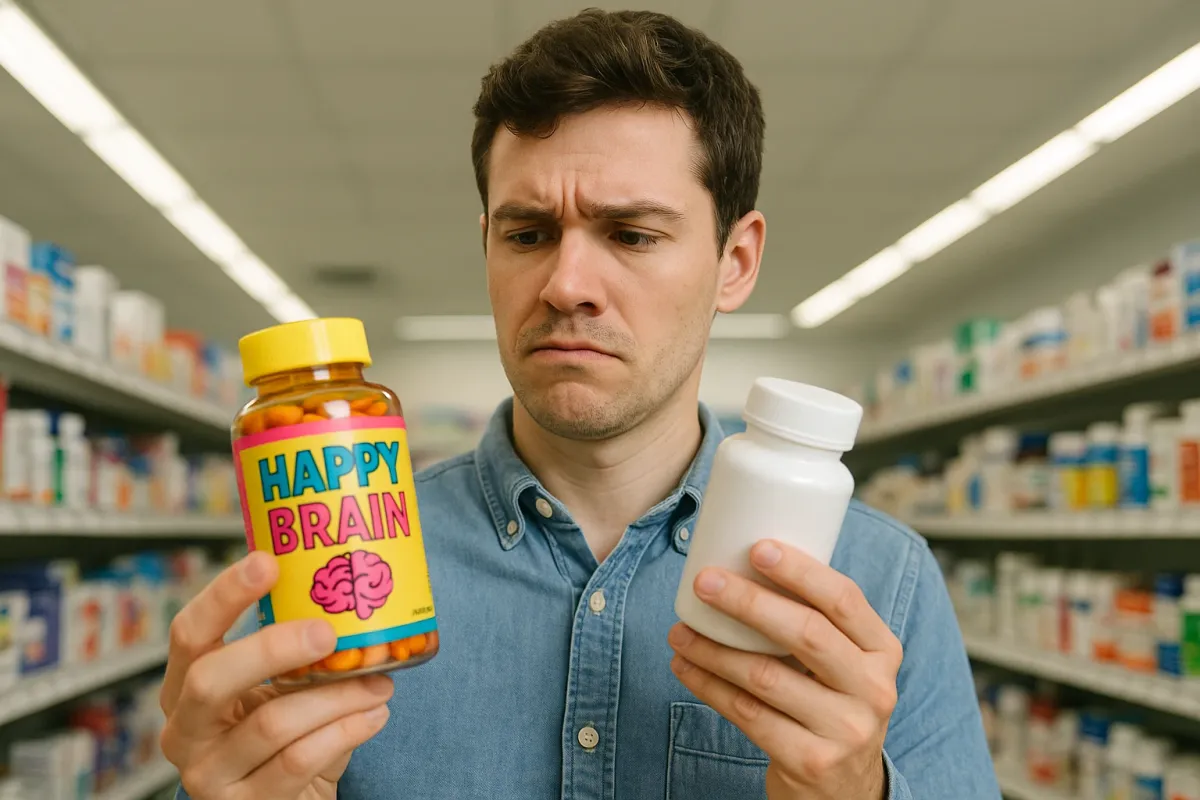
That overlap—between mental health awareness and wellness marketing—has created a huge surge in “happy brain,” “mood boost,” and “calm” supplement blends. Some are thoughtfully formulated. Others are basically expensive candy wrapped in self‑care language.
Below is a grounded look at what current science says about mental‑health‑adjacent supplements—what’s promising, what’s overhyped, and how to use them safely as part of a broader approach to well‑being.
Important: Supplements are not a replacement for therapy, prescribed medication, or emergency care. If you’re struggling with suicidal thoughts or severe depression, seek professional help immediately.
1. Omega‑3s: The Mental Health Nutrient With The Strongest Track Record
While many mood supplements lean on trendy herbs, the quiet workhorse in the research is still omega‑3 fatty acids—particularly EPA and DHA from marine sources (fish oil, krill oil, algae oil).
What the evidence says
- Meta‑analyses of randomized controlled trials suggest omega‑3s—especially higher EPA formulas—may provide modest benefit in major depressive disorder as an add‑on to standard treatment, particularly for people with inflammation or low baseline omega‑3 status.
- For example, a 2019 meta‑analysis in Translational Psychiatry found that omega‑3s with ≥60% EPA content showed the most benefit in depressive symptoms.
- Some trials also suggest benefit for anxiety symptoms, though findings are less consistent than for depression.
- Benefits appear more pronounced when:
- EPA dose is in the ~1,000–2,000 mg/day range
- Omega‑3s are used with standard care (not instead of it)
How to use omega‑3s intelligently
- Look for products that clearly list EPA and DHA per serving (not just “fish oil 1,000 mg”).
- For general brain and heart health, many guidelines reference a combined EPA+DHA intake around 250–500 mg/day from food and/or supplements; studies on mood often use higher doses under medical supervision.
- Choose brands that provide:
- Third‑party testing for heavy metals and oxidation
- IFOS, NSF, or similar quality certifications when possible
- If you’re on blood thinners, have a bleeding disorder, or are preparing for surgery, talk to your clinician before high‑dose omega‑3s.
Key takeaway: Among all “brain and mood” supplements, omega‑3s have some of the strongest clinical backing—but think of them as a supportive layer, not a stand‑alone solution.
2. Vitamin D, B12, and Folate: When Deficiencies Masquerade as “Just Anxiety”
The current wave of mental health storytelling online is helping many people recognize symptoms they’ve lived with for years. But something often gets missed: a subset of those “mental health” symptoms have a nutritional deficiency component.
What we know from recent research
- Vitamin D
- Low vitamin D status has been associated with higher risk of depression in observational research.
- A 2022 umbrella review in Critical Reviews in Food Science and Nutrition reported that supplementation can modestly improve depressive symptoms—especially in those who are deficient and in clinically depressed patients.
- Vitamin B12 and Folate (B9)
- Both are involved in one‑carbon metabolism and methylation, crucial for neurotransmitter synthesis.
- Deficiency can show up as fatigue, low mood, cognitive “fog,” and even irritability or apathy.
- Low folate and B12 are more common in people with restrictive diets, malabsorption issues (e.g., celiac, IBD), bariatric surgery history, or certain medications (like metformin or proton‑pump inhibitors).
Smart strategy
- Don’t guess. Ask your healthcare provider about testing:
- 25(OH) vitamin D
- B12
- Possibly folate and iron if symptoms and diet suggest risk
- If you’re deficient:
- Use targeted dosing (often higher at first, then a maintenance dose) under medical guidance.
- Re‑check levels after a few months, especially for vitamin D and B12.
- If you’re not deficient:
- Overshooting fat‑soluble vitamins like D can be harmful. More is not better; “optimal” is better.
Key takeaway: Before reaching for complex “mood blends,” rule out basic deficiencies. Correcting a low vitamin D or B12 level can make a real difference—and it’s one of the most evidence‑based steps you can take.
3. Adaptogens for Stress & Calm: Ashwagandha, Rhodiola & Friends
Mentally themed comics and memes have helped people admit they feel “fried,” “burned out,” or “always on edge.” That language has fueled the popularity of adaptogens—herbs marketed as helping the body adapt to stress.
Two of the most studied:
- Ashwagandha (Withania somnifera)
- Rhodiola rosea
What current trials suggest
- Ashwagandha
- Several randomized controlled trials have found standardized ashwagandha extract (often 240–600 mg/day) can reduce perceived stress and anxiety scores and may lower cortisol.
- A 2021 systematic review in Journal of Ethnopharmacology concluded there’s “promising evidence” for stress and anxiety reduction, with more high‑quality studies still needed.
- Rhodiola
- Some evidence suggests benefits for fatigue, stress, and mild depressive symptoms, especially in people with burnout‑type complaints.
- Results across trials are mixed due to differences in extracts, doses, and study design.
Risks and caveats that rarely make it into marketing
- Adaptogens can interact with:
- Thyroid medication (ashwagandha)
- Blood pressure or blood sugar medications
- Certain psychiatric medications
- Quality matters; many adaptogen studies use standardized extracts, but most retail products don’t match those specifications.
- For people with bipolar disorder, mania risk, or complex psychiatric histories, any mood‑active supplement should be cleared with a psychiatrist first.
Practical guidance
- If you’re curious, start with:
- A single‑ingredient product from a transparent brand
- A modest dose, not “extra strength” blends
- Track your response over 2–4 weeks: sleep, energy, anxiety, irritability. If nothing clearly improves, don’t just keep adding more herbs.
Key takeaway: Adaptogens may help some people feel calmer or more resilient to stress, but they’re not universally effective and they’re not risk‑free. Treat them like gentle tools—not magic fixes.
4. Magnesium and Sleep/GABA Supplements: Where Calm Meets Chemistry
As more creators talk openly about insomnia, racing thoughts, and nighttime anxiety, “sleep gummies” and “calm powders” have exploded in popularity. The usual core ingredients: magnesium, sometimes paired with L‑theanine, GABA, or botanicals like chamomile.
Magnesium: a quiet essential
- Magnesium is a cofactor in hundreds of enzymatic reactions, including those involved in nerve function and muscle relaxation.
- A 2021 review in Nutrients noted that magnesium deficiency is associated with anxiety and poor sleep in observational data, and supplementation may improve sleep quality in magnesium‑deficient individuals.
- Forms commonly used for relaxation:
- Magnesium glycinate (gentler on the gut, often used for calm/sleep)
- Magnesium citrate (more laxative effect)
- Magnesium threonate (studied more for cognitive effects, still emerging evidence)
GABA and L‑theanine
- GABA (gamma‑aminobutyric acid):
- It’s the main inhibitory neurotransmitter in the brain, but orally taken GABA has uncertain ability to cross the blood–brain barrier.
- Some small human studies show calming effects; others do not. Much of the hype is ahead of the science.
- L‑theanine:
- An amino acid from tea leaves, shown in human studies to support relaxed alertness and potentially improve sleep quality, especially when combined with caffeine or taken at night.
- Doses in research are often 100–400 mg/day.
Using these supplements wisely
- If your diet is low in magnesium‑rich foods (nuts, seeds, legumes, leafy greens), a modest magnesium supplement may help if you’re insufficient—but think “restore normal,” not “sedate myself.”
- Be careful combining:
- Multiple sedating agents (e.g., magnesium + high‑dose melatonin + antihistamines + alcohol).
- Supplements with prescription sleep or anxiety medications.
- Start low, especially if you have kidney disease or are on medications that affect electrolyte balance—speak with your clinician first.
Key takeaway: Magnesium and L‑theanine have some supportive evidence for sleep and calm, particularly in people who are deficient or high‑stress. GABA supplements are more speculative. None of these should be used to self‑treat severe insomnia without medical guidance.
5. Red Flags in “Mood Boost” Marketing—and How to Protect Yourself
As mental health content becomes more mainstream, some companies are blurring the line between supportive wellness and unproven psychiatric claims. The aesthetic might look gentle and wholesome, but the science behind many blends is thin.
Watch for these warning signs
- Vague but extreme promises
- “Cures depression naturally”
- “Replaces your antidepressant”
- “Fixes trauma without therapy”
- No standardization or dosing clarity
- “Proprietary mood blend 2,173 mg” with no breakdown of individual ingredients or standardized extracts.
- No third‑party testing
- No mention of heavy metal, microbial, or potency testing—especially important for herbs.
- Aggressive self‑diagnosis messaging
- “If you relate to this meme, you need our supplement.”
- Discouraging professional care
- Any suggestion to stop your medication, skip therapy, or avoid talking to a doctor is a major red flag.
Safer, evidence‑informed approach
- Start with fundamentals that have broad support:
- Omega‑3s if intake is low
- Correcting clear deficiencies (vitamin D, B12, iron if low)
- Possibly magnesium if your intake is poor and you have compatible symptoms
- View herbs (ashwagandha, rhodiola, etc.) as adjuncts:
- Add them only after basics are in place.
- Introduce one at a time, so you can tell what’s helping or causing side effects.
- Keep your healthcare team in the loop:
- Especially if you’re on psychiatric medication, have a cardiac condition, are pregnant/breastfeeding, or have autoimmune or endocrine issues.
Key takeaway: The best “mental health supplement” regimen is boringly rational: address deficiencies, use evidence‑supported nutrients, and be skeptical of anything that promises life‑changing results without lifestyle, therapy, or medical care.
Conclusion
The rise of mental health storytelling—from viral comics to deeply personal posts—is changing how we talk about anxiety, depression, and burnout. That’s a powerful cultural shift. But it also creates fertile ground for supplements that overpromise and under‑deliver.
Used thoughtfully, certain nutrients and botanicals—omega‑3s, vitamin D (when low), B vitamins, magnesium, and some adaptogens—can support mental well‑being as part of a broader plan that includes sleep, nutrition, movement, social connection, and, when needed, professional care.
Before you add another “happy pill” to your cart, pause and ask:
- Have I checked for basic deficiencies?
- Do I understand what’s actually in this product and at what dose?
- Is this meant to support my mental health plan—or secretly replace it?
When you combine real‑world self‑awareness (the kind creators are helping normalize) with science‑backed, cautious use of supplements, you get something much stronger than a trend: a mental health strategy that respects both your biology and your story.
Key Takeaway
The most important thing to remember from this article is that this information can change how you think about Supplements.