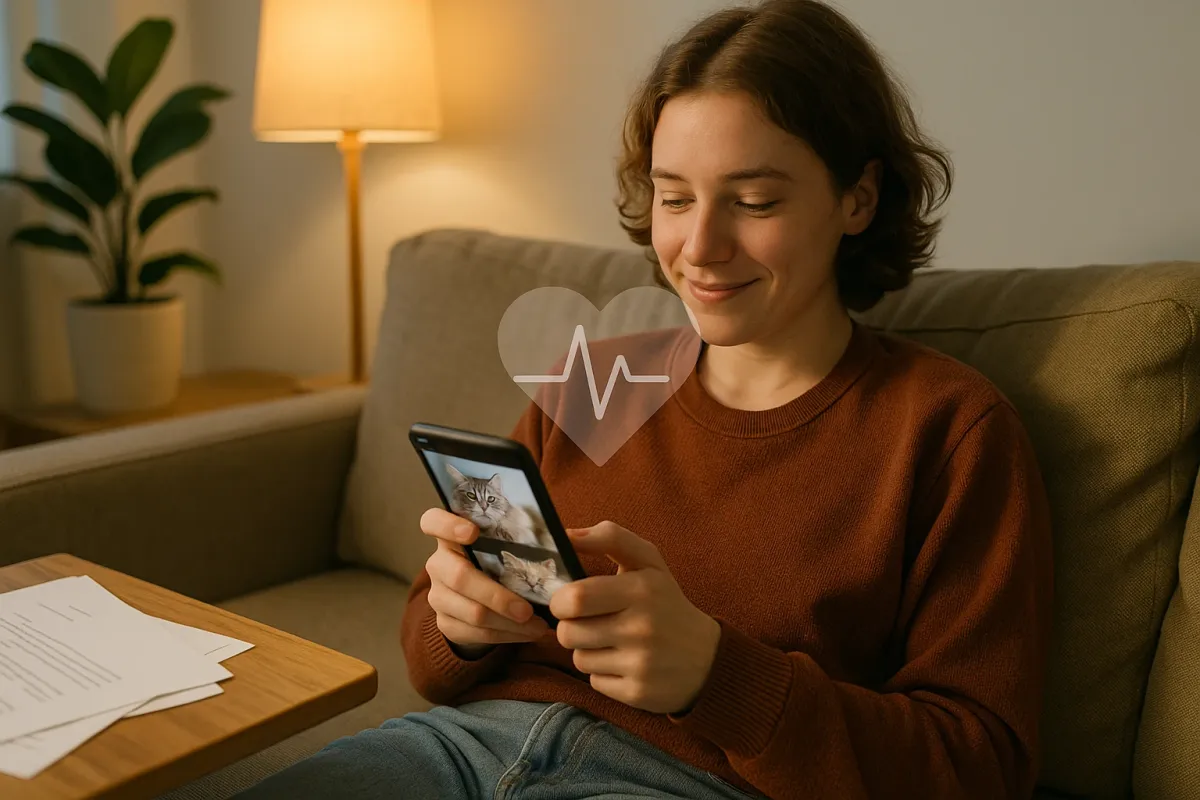
If your social feeds feel flooded with impossibly fluffy cats right now, you’re not imagining it. Online communities dedicated to sharing “floof overload” photos—like the fast‑growing Reddit group r/SupermodelCats and trending Instagram compilations—are booming. A recent Bored Panda roundup of “the fluffiest cats ever” went viral, reminding researchers of a pattern they’ve been watching for years: when global stress climbs, engagement with soothing, cute‑animal content spikes.
This isn’t just harmless distraction. Over the past decade, psychologists, neuroscientists, and public‑health researchers have quietly built a serious evidence base around what these soft, funny, comforting images are doing to our brains and bodies. For a site like Eleven Suplements, where we’re usually talking about nutrients, sleep, and performance, the new data on “visual comfort” is a timely reminder: health isn’t just what you swallow—it’s also what you scroll.
Below are five research‑backed insights that explain why your timeline full of fluffy cats might be doing more for your health than you think, plus how to use this science intentionally (not just by doom‑scrolling until a cute video randomly appears).
1. Cute Animal Images Can Lower Stress Hormones and Blood Pressure
Several labs have now shown that even brief exposure to cute animal content can produce measurable physical changes linked to stress.
- A small but influential study from the University of Leeds (2019), conducted with Coventry University and the BBC, measured heart rate, blood pressure, and self‑reported anxiety in students and staff before and after a 30‑minute session of watching cute animals (kittens, puppies, quokkas, baby gorillas).
- Average anxiety scores dropped by about 35%.
- Heart rate and blood pressure fell into a healthier range for the majority of participants.
- Earlier work on “restorative images” has found similar patterns: viewing calm, positive images (including animals) can reduce sympathetic nervous system activity—the part associated with fight‑or‑flight—and support parasympathetic “rest and digest” function.
Mechanistically, researchers suspect that positive affect (feeling uplifted, amused, or soothed) suppresses stress‑related systems like cortisol release, at least transiently. Over time, repeated small reductions in daily stress load may reduce wear and tear on the body (sometimes called “allostatic load”).
How to use this intentionally:
- Schedule, don’t stumble: Instead of mindless scrolling, try a deliberate 2–5‑minute “cute break” between demanding tasks.
- Watch your body: If your shoulders drop, jaw unclenches, or breathing slows, you’re seeing the stress‑regulation circuit in real time.
Key takeaway: Fluffy‑cat feeds aren’t a replacement for deep stress‑management strategies, but they can be a quick, physiological “reset button” during hectic days.
2. “Kawaii Effect”: Why Cuteness Sharpens Focus, Not Just Mood
The viral appetite for extra‑fluffy cats—round faces, big eyes, tiny noses—taps into what Japanese researchers call the “kawaii effect.” This isn’t just cultural; it’s neurocognitive.
- A landmark 2012 study in PLoS ONE by Hiroshi Nittono and colleagues found that looking at cute animal images improved performance on tasks requiring careful attention and fine motor control. Participants who viewed very “kawaii” baby animals:
- Made fewer errors on detail‑heavy tasks.
- Worked more slowly but more accurately.
- Showed increased focus compared with those viewing neutral or less cute images.
- Cuteness seems to activate a “caregiving” mindset—our evolutionary response to infant‑like features (big eyes, round faces, small mouths). This shifts attention toward careful, protective behavior.
- For knowledge workers, students, and gamers, this may translate into slightly better focus and precision after a dose of cuteness.
- Before starting a high‑precision task (coding, exam revision, design work), you might benefit from a short, deliberate “kawaii warm‑up”—scrolling through a curated folder of your favorite animal pictures for 60–90 seconds.
- The key is short, intentional exposure; long, unstructured scrolling tends to erode attention rather than enhance it.
Why this matters:
Practical applications:
Key takeaway: Those extra‑fluffy cat photos might be more than a distraction—they may prime your brain for careful, focused work when used deliberately.
3. Parasocial “Pet” Connections Can Buffer Loneliness—With Limits
The explosion of online communities centered on animals (from Instagram “catfluencers” to fluffy‑cat subreddits) mirrors a trend in mental‑health research: people are turning to pets and pet content to cope with loneliness, especially post‑pandemic.
Evidence highlights a few important nuances:
- Studies of real‑life pet ownership (e.g., systematic reviews in BMC Psychiatry and Anthrozoös) suggest that companion animals can:
- Reduce feelings of loneliness and social isolation.
- Provide emotional support and routine.
- Encourage physical activity (in the case of dogs).
- Emerging research on parasocial relationships (one‑sided emotional bonds with media figures or characters) suggests that people can feel surprisingly strong connections to animals they only know through screens. This can:
- Provide a mild buffer against loneliness.
- Offer a sense of belonging when paired with active communities (comments, shared jokes, in‑group language).
- The strongest protective effects against loneliness still come from reciprocal, real‑world social support—friends, family, colleagues, community groups.
- Heavy reliance on online comfort content without real‑life connections can, for some, deepen avoidance and make offline interaction feel harder over time.
- Treat your favorite fluffy‑cat accounts as a supplement to, not a substitute for, real human relationships.
- Use them as social “icebreakers”: share a favorite video with a friend, or comment thoughtfully in a community you care about. Turning passive viewing into active engagement is what seems to carry more psychological benefit.
However, there are caveats:
How to make this work for you:
Key takeaway: Online “pet communities” can nudge you toward connection and warmth—but they work best when they complement, not replace, real‑world bonds.
4. Not All Cute Content Is Equal: When Scrolling Becomes Stressful
The current wave of viral fluff—compilations, “before and after” rescues, humor clips—sits alongside a harsher reality: some animal content is distressing, misleading, or even staged at the animal’s expense. This is where health and ethics intersect.
Recent concerns from animal‑welfare organizations and digital‑wellbeing researchers include:
- Stress‑inducing extremes: Algorithms often push towards more sensational and emotionally charged videos over time. Exposure to:
- Graphic rescue situations,
- Aggressive pranks on pets,
- Or polarizing comment wars
can raise heart rate and anxiety, even if you started with something soothing.
- Ethical distress: Many viewers report feeling guilty or upset after learning that some “cute” clips involve stressed or drugged animals, or setups where the animal is put in danger for content. That moral discomfort can undermine any relaxation benefit.
- Screen‑time trade‑offs: Longer sessions of device use, especially at night, are associated with poorer sleep quality, eye strain, and lower mood. The blue light and constant novelty activate brain circuits linked to alertness rather than rest.
- Set time boundaries: Aim for short, intentional doses—e.g., a 5‑minute “cat break” rather than a 45‑minute late‑night scroll.
- Curate your feed: Follow accounts or communities that are transparent about animal welfare and avoid content that leaves you feeling uneasy or agitated.
- Notice the after‑effect: If you regularly feel wired, guilty, or emotionally drained after “cute content,” your nervous system is giving you feedback—listen to it.
Research‑informed guidelines:
Key takeaway: The health benefits of fluffy‑cat content depend heavily on context, timing, and ethics. Soothing, respectful content in small doses supports wellbeing; sensational, endless feeds do the opposite.
5. Micro‑Joy Practices: Turning Fluffy Feeds into a Real Self‑Care Tool
The spike in engagement with fluffy‑cat roundups and similar lighthearted content is part of a bigger behavior pattern public‑health experts are now studying: “micro‑joy” practices—small, intentional habits that reliably spark positive emotion.
Researchers in positive psychology and behavioral medicine have found that:
- Frequent “tiny positives” (small moments of amusement, awe, warmth, or gratitude) can:
- Broaden cognitive flexibility (the “broaden‑and‑build” theory by Barbara Fredrickson).
- Support resilience by balancing daily stressors with daily uplifts.
- Correlate with better cardiovascular outcomes and lower inflammatory markers over time in some studies.
- Short, repeatable practices (like a 2‑minute gratitude list, looking at a favorite photo, or a short walk) are more likely to stick than ambitious but irregular routines.
- It’s highly accessible.
- It reliably evokes a mild positive emotion (amusement, warmth, softness).
- It can be paired with other healthy behaviors.
- Pair it with breaks: After 45–60 minutes of focused work, take a 3–5 minute break. Stand up, drink water, and watch two or three of your favorite wholesome clips.
- Use it as a state‑shift tool: After reading heavy news or dealing with conflict, a brief “palette cleanser” of comforting content can help your nervous system reset before your next task.
- Keep it intentional: Save or bookmark a small, curated library of accounts or videos that you know leave you calmer and happier. Go directly to those instead of letting the algorithm decide.
Fluffy‑cat content fits this model well:
How to build a micro‑joy routine with animal content:
Key takeaway: When used deliberately, a few minutes of fluffy‑cat content can be part of a science‑supported micro‑joy routine that complements nutrition, movement, and sleep as pillars of everyday wellbeing.
Conclusion
The surge of viral “fluffiest cat ever” posts may seem like just another social‑media fad, but research suggests something deeper is happening. In a high‑stress, hyperconnected world, our brains are seeking fast, reliable ways to downshift from threat mode into something softer, safer, and more focused. Cute‑animal content—when ethical, intentional, and kept in healthy time boundaries—can genuinely help.
For health‑conscious readers, the takeaway isn’t to trade your workout or omega‑3s for kitten clips. It’s to recognize that what you feed your mind and nervous system between tasks matters. A 90‑second scroll through a vetted, wholesome fluffy‑cat account can lower stress markers, sharpen focus, ease loneliness a bit, and contribute to a broader “micro‑joy” routine that supports your overall health.
Think of it as one more tool in your self‑care toolkit: not the foundation, but a surprisingly powerful supplement—no pun intended—to the core habits of sleep, nutrition, movement, and real‑world connection.
Key Takeaway
The most important thing to remember from this article is that this information can change how you think about Research.