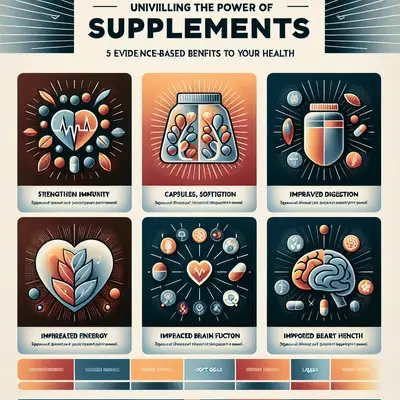
Supplements can be genuinely useful—or an expensive distraction. For health‑conscious people, the challenge isn’t just choosing a product, but understanding what actually matters behind the marketing. Instead of chasing every new capsule or powder, you can use a few evidence-based principles to sort meaningful options from noise and align your choices with your real health goals.
This guide walks through five research‑backed points to help you assess supplements more confidently, without needing a medical degree or hours of PubMed deep dives.
1. Start With “Need” Before “Nice to Have”
The most useful supplement is the one that solves a real problem—not the one with the flashiest claims.
A “real problem” usually falls into one of three categories: a confirmed deficiency (for example, low vitamin D on a blood test), a clearly increased requirement (such as pregnancy, vegan diets, or malabsorption issues), or a specific, evidence‑supported therapeutic use under professional guidance. Many people skip this step and buy based on trends instead of on their own data, which makes it almost impossible to measure benefit.
Whenever possible, pairing lab results and clinical context with supplementation gives you a much clearer signal. For instance, vitamin B12 and iron are commonly low in people following strict plant‑based diets; correcting those with targeted supplements is very different from casually layering on a multivitamin “just in case.” Working with a healthcare professional to interpret labs can reveal where a supplement might be high‑impact—and where lifestyle changes may be a better first move.
2. Match the Form and Dose to the Evidence
Not all versions of a nutrient are equivalent, and more is not automatically better.
Research studies typically specify an exact form (for example, magnesium citrate vs. magnesium oxide) and a precise dose. When a supplement label uses a different form or much lower or higher dose than was studied, you’re no longer buying the same intervention—even if the marketing sounds similar. For some nutrients, form affects both absorption and side effects: magnesium citrate tends to be better absorbed but can be more laxative; magnesium oxide is poorly absorbed yet still common in cheaper formulas.
Dose ranges also matter. Fat‑soluble vitamins (A, D, E, K) can accumulate in the body, and chronically high intakes may cause harm. Even water‑soluble vitamins like B6 can cause issues at high doses over time. Comparing label doses to public health guidelines (such as Recommended Dietary Allowances and Tolerable Upper Intake Levels) helps you see whether a product sits in a reasonable range. When in doubt, matching the form and dose used in high‑quality trials—or staying within established guidelines—is a safer, more rational approach than chasing “megadoses.”
3. Look for Third‑Party Testing, Not Just Buzzwords
Words like “pure,” “clinical strength,” and “pharmaceutical grade” have no standardized meaning in the supplement aisle, but third‑party testing does.
Independent organizations such as USP (U.S. Pharmacopeia), NSF International, and ConsumerLab test supplements for identity (is it the right ingredient?), potency (is the dose accurate?), and contaminants (heavy metals, microbes, adulterants). Seeing a recognizable certification mark doesn’t guarantee a supplement will work, but it does provide an extra layer of quality control beyond a manufacturer’s own promises.
This is particularly important for products at higher risk of contamination or adulteration, such as herbal blends, sports performance powders, and weight‑loss pills. Without third‑party testing, labels may not fully match reality—either in terms of what’s inside or in the levels of unwanted substances. Choosing brands that publish test results or carry certification seals can significantly reduce uncertainty around what you’re actually swallowing.
4. Respect Interactions: Supplements Are Active, Not Neutral
Because supplements are sold over the counter, it’s easy to forget that many have real, biologically active effects—and those effects can interact with medications, lab tests, or existing health conditions.
For example, high‑dose vitamin K can interfere with warfarin and other blood‑thinning medications. St. John’s wort can alter how the liver metabolizes certain drugs, potentially lowering the effectiveness of birth control pills, antidepressants, or anti‑rejection medications. Even something as common as biotin (often found in “hair, skin, and nails” formulas) can distort certain lab test results if taken in high doses before blood work.
This doesn’t mean supplements should be feared, but they should be treated with the same respect you’d give a new prescription. Keeping an up‑to‑date list of all supplements and sharing it with your healthcare providers helps them consider potential interactions. Pausing certain supplements before surgeries, imaging, or lab tests may also be recommended—another reason coordination with a clinician is worth the effort.
5. Define What “Success” Looks Like Before You Start
A supplement is easiest to evaluate when you know what you’re looking for—and on what timeline—before you take the first dose.
Some benefits are measurable and relatively quick, like correcting a documented deficiency and repeating a lab in several months. Others are subjective and slower to emerge, such as changes in perceived energy, sleep quality, or exercise recovery. Setting expectations at the outset (for example, “If my ferritin increases into a healthier range and my fatigue improves within three to six months, I’ll consider this effective”) makes it easier to avoid indefinite use without clear benefit.
It’s also useful to change one major variable at a time when possible. Starting multiple new supplements alongside big lifestyle shifts (new workout, different diet, improved sleep) makes it hard to know what’s helping. Periodic check‑ins—every 8–12 weeks, or at your next medical appointment—are an opportunity to reassess what to continue, what to adjust, and what to stop. Over time, this turns supplementation from a static “stack” into a responsive tool that evolves with your health status and goals.
Conclusion
Supplements can play a meaningful role in a thoughtful wellness strategy, but they’re most effective when guided by need, evidence, and careful observation—not by hype. By focusing on real deficiencies or indications, aligning form and dose with research, prioritizing third‑party testing, respecting interactions, and defining success in advance, you give yourself a structured way to decide what’s worth taking.
The goal isn’t to build the biggest supplement collection; it’s to make a small number of well‑chosen products work harder for your health, in partnership with sound nutrition, movement, sleep, and medical care.
Sources
- [U.S. Food & Drug Administration – Dietary Supplements Overview](https://www.fda.gov/food/dietary-supplements) - Explains how supplements are regulated in the U.S., labeling requirements, and consumer safety considerations.
- [National Institutes of Health Office of Dietary Supplements](https://ods.od.nih.gov) - Provides fact sheets on specific vitamins, minerals, and other supplements, including evidence, recommended intakes, and safety data.
- [Harvard T.H. Chan School of Public Health – Vitamins and Minerals](https://www.hsph.harvard.edu/nutritionsource/vitamins/) - Reviews the role of various micronutrients, food vs. supplement sources, and when supplementation may be appropriate.
- [Mayo Clinic – Herbal Supplements: What to Know Before You Buy](https://www.mayoclinic.org/healthy-lifestyle/consumer-health/in-depth/herbal-supplements/art-20046488) - Discusses safety, quality concerns, and interaction risks related to herbal products.
- [U.S. Pharmacopeia (USP) – USP Verified Dietary Supplements](https://www.usp.org/verification-services/verified-dietary-supplements) - Describes USP verification standards and why third‑party testing matters for supplement quality and purity.
Key Takeaway
The most important thing to remember from this article is that this information can change how you think about Supplements.