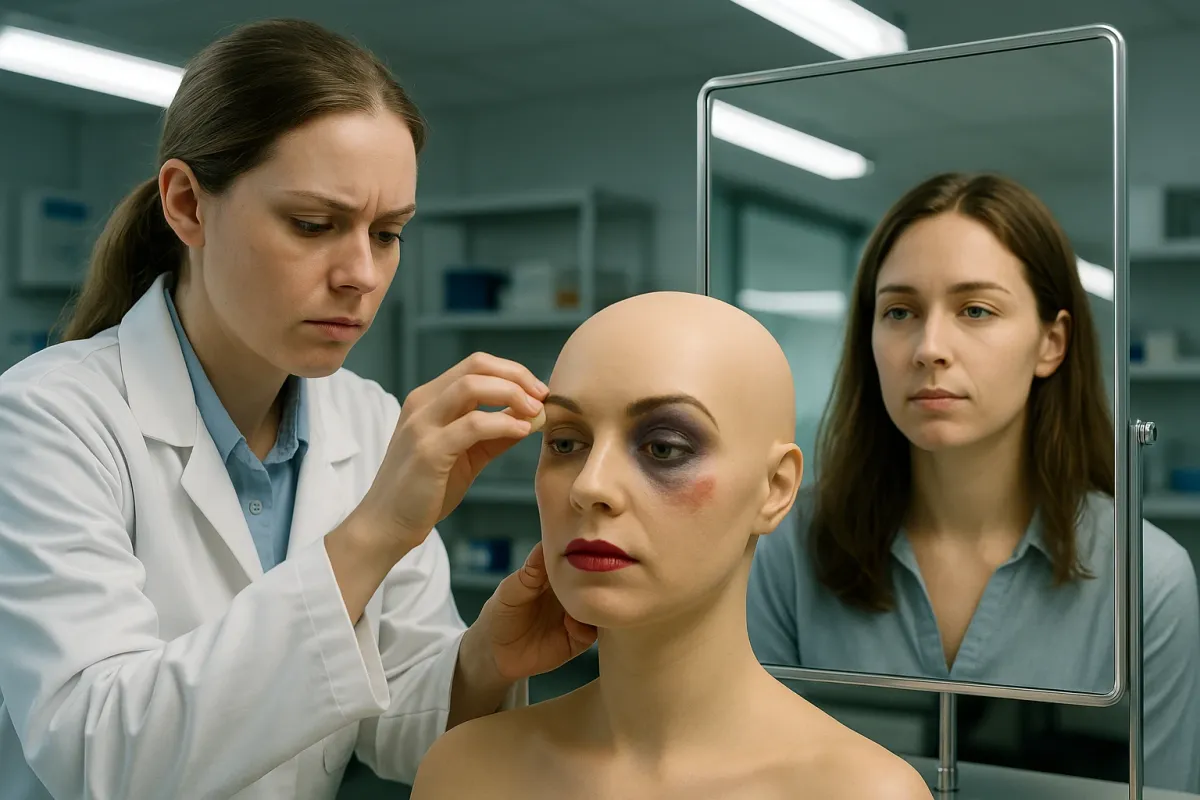
Makeup-gone-wrong posts are everywhere right now. One of today’s trending stories on BoredPanda highlights a subreddit called r/BadMakeupArtists, where people share foundation “mask” lines, overdrawn brows, and contouring disasters that look nothing like real skin. It’s funny, but it also exposes something serious: most of us are experimenting on our faces without understanding the science behind what actually touches our skin.
At Eleven Suplements, we focus on evidence—not just aesthetics. Viral beauty fails are a reminder that what sits on your skin (and what you take for your skin) should be guided by research, not just trends. Here’s what current science says about skin health, ingredients, and supplements behind the looks we post online.
1. Skin Is Not Just A Canvas: It’s A Living Immune Organ
The “caked-on” looks in the bad-makeup subreddit are more than a style choice—they’re a stress test for your skin barrier.
Dermatology research now views skin as a front-line immune organ, not just a passive surface. The outer layer (stratum corneum) and its lipids (ceramides, cholesterol, fatty acids) form a barrier that:
- Keeps moisture in
- Keeps irritants and microbes out
- Communicates with your immune system
Studies show that barrier disruption (through over-cleansing, harsh scrubs, or heavy occlusive layers plus poor removal) can increase inflammation and sensitivity, and may worsen conditions like acne and eczema.¹
Evidence-backed takeaways:
- Look for “barrier-supporting” language in skincare: ceramides, niacinamide, and mild surfactants.
- If your makeup routine involves heavy, long-wear formulas, pair it with gentle removal (oil or balm cleansers followed by a mild second cleanser) rather than aggressive scrubbing.
- Consider nutrients that support barrier lipids from the inside: essential fatty acids (omega‑3 and some omega‑6) are implicated in maintaining a healthier barrier function.²
2. Inflammation Shows Up First On Your Face
Many of the worst makeup fails go viral because they look angry: red, irritated, textured skin under a thick layer of foundation. That’s not just an aesthetic issue; it’s often inflammation on display.
Research links chronic low-grade inflammation to:
- Increased skin redness and reactivity
- Slower wound healing
- Collagen breakdown and accelerated visible aging³
From a nutrition and supplement perspective, several anti-inflammatory strategies have reasonable evidence:
- Omega‑3 fatty acids (EPA/DHA): Meta-analyses suggest they reduce systemic inflammatory markers and may help certain inflammatory skin conditions like psoriasis and acne in some individuals.⁴
- Diet quality overall: High-glycemic diets and ultra-processed foods are associated with more acne and worse skin quality in observational research.⁵
- Polyphenols and antioxidants: Ingredients like green tea extract, resveratrol, and vitamin C show promising anti-inflammatory and photoprotective effects in skin, especially when combined with sun protection.⁶
What this means practically:
- If your skin always looks “mad” under makeup, a skin-friendly anti-inflammatory pattern (Mediterranean-style diet, omega‑3 intake, colorful plants) may do more than buying yet another concealer.
- Supplementation with omega‑3s and antioxidants can be helpful, but should complement—not replace—a solid diet and sunscreen habit.
3. Collagen And Elasticity: More Than Just A “Before/After” Filter
Many people in the bad-makeup threads are trying to “paint on” youth: ultra-heavy concealer under the eyes, aggressive contour to mimic bone structure, filters to blur lines. But research suggests you can’t fully fake what you’re losing: collagen and elastin.
Here’s where the science stands:
- Collagen peptides: Several randomized controlled trials show that daily oral collagen peptides (typically 2.5–10 g/day for 8–12 weeks) can improve skin elasticity, hydration, and wrinkle depth compared with placebo.⁷
- Vitamin C and protein: Your body needs adequate protein and vitamin C to synthesize its own collagen. Deficiency in either can compromise skin structure and healing.⁸
- UV exposure: The biggest collagen “eraser” is not your concealer—it’s chronic sunlight. UV radiation accelerates collagen breakdown and causes uneven pigmentation.⁹
Evidence-based steps:
- If you use a collagen supplement, look for hydrolyzed collagen peptides from reputable manufacturers, with transparent dosing (at least 2.5 g/day).
- Ensure baseline nutrition: roughly 1.2–1.6 g protein/kg body weight (for active adults, unless your healthcare provider advises otherwise), plus vitamin C–rich foods or a supplement if intake is low.
- Combine any “beauty supplement” with daily broad-spectrum SPF, which remains the most strongly supported anti-aging intervention for skin.
4. The Microbiome Matters—On Your Skin And In Your Gut
Many viral bad-makeup photos show breakouts and congestion under layers of product. While pore-clogging ingredients matter, research points to a more complex player: your microbiome.
Two systems are involved:
- Skin microbiome: A diverse mix of bacteria, fungi, and viruses that help defend against pathogens and modulate inflammation. Disrupting this balance (for example, through frequent use of strong antiseptic products or over-exfoliation) may worsen acne, dermatitis, and sensitivity.¹⁰
- Gut-skin axis: Emerging studies suggest that gut dysbiosis (imbalanced gut microbes) can influence systemic inflammation and skin conditions such as acne, rosacea, and atopic dermatitis.¹¹
Current evidence (still evolving, but promising):
- Probiotics and prebiotics: Some strains (e.g., certain Lactobacillus and Bifidobacterium species) have shown benefits for acne and eczema in small trials, likely by modulating immune and inflammatory responses.¹²
- Topical microbiome-friendly products: Formulations that avoid unnecessary broad-spectrum antimicrobials and incorporate prebiotic ingredients may help support a healthier skin microbiome, though research is ongoing.
Practical application:
- If your skin reacts badly to every new product, discuss with a dermatologist whether your routine is too stripping or antimicrobial-heavy.
- From a supplement angle, a well-studied probiotic blend and a fiber-rich diet may support both gut and skin health, especially if you also experience digestive issues.
- Avoid the temptation to “sterilize” your face to clear acne; aim to rebalance, not annihilate, microbes.
5. Beauty Trends Move Fast—Research Does Not
The BoredPanda feature on Bad MakeUp Artists perfectly captures our era: one month it’s glass skin, the next it’s “snatched” contour, then “cold girl” blush. We chase each trend with new products, sometimes adding 10+ steps to our routine overnight.
Scientific research, however, moves on a very different timeline:
- Large, well-controlled studies on skin health, ingredients, or supplements often take years to conduct and publish.
- Evidence builds through repeated findings, not overnight viral posts.
- Regulatory oversight for cosmetics and supplements varies by country and is often less strict than for drugs, meaning marketing can easily outpace proof.
Evidence-first mindset:
- Don’t assume that a trending ingredient (like a “miracle” peptide or exotic botanical) is better just because it’s new. Look for human data: randomized controlled trials, not just in vitro or animal studies.
- Be cautious of claims that a supplement or topical will “reverse aging,” “detox the skin,” or act as a “filler in a bottle.” These claims rarely align with regulated, evidence-based language.
- When in doubt, prioritize what has consistent support: sunscreen, sleep, balanced nutrition, stress management, and a well-formulated, gentle routine.
Conclusion
Today’s viral “bad makeup” posts are more than entertainment—they’re a mirror of how disconnected our beauty habits can be from actual science. We layer on products to chase trends while ignoring the basics: skin as a living barrier and immune organ, the role of inflammation, the importance of collagen, the skin–microbiome connection, and the slow, careful pace of quality research.
For health-conscious readers, the opportunity is clear: use the same curiosity that drives you to scroll those fail threads to also question ingredient lists, supplement labels, and bold promises. When you align your routine with evidence—inside and out—you’re not just avoiding a makeup disaster. You’re investing in skin that looks better with makeup, without makeup, and years from now.
References (simplified)
- Elias PM. Skin barrier function. Curr Allergy Asthma Rep.
- Boelsma E et al. Nutritional skin care: health effects of micronutrients and fatty acids. Am J Clin Nutr.
- Krutmann J et al. The skin aging exposome. J Dermatol Sci.
- Millsop JW et al. Omega-3 fatty acids in inflammatory skin diseases. Int J Dermatol.
- Burris J et al. Dietary glycemic index and load in acne. J Acad Nutr Diet.
- Nichols JA, Katiyar SK. Skin photoprotection by natural polyphenols. J Dermatol Sci.
- Proksch E et al. Oral collagen peptide supplementation and skin health. Skin Pharmacol Physiol.
- Pullar JM et al. The roles of vitamin C in skin health. Nutrients.
- Gilchrest BA. Photoaging. J Invest Dermatol.
- Sanford JA, Gallo RL. Functions of the skin microbiota. Nat Rev Microbiol.
- Salem I et al. The gut microbiome and the skin. Clin Dermatol.
- Navarro-López V et al. Probiotics in acne vulgaris: a randomized trial. Dermatology.
Key Takeaway
The most important thing to remember from this article is that this information can change how you think about Research.