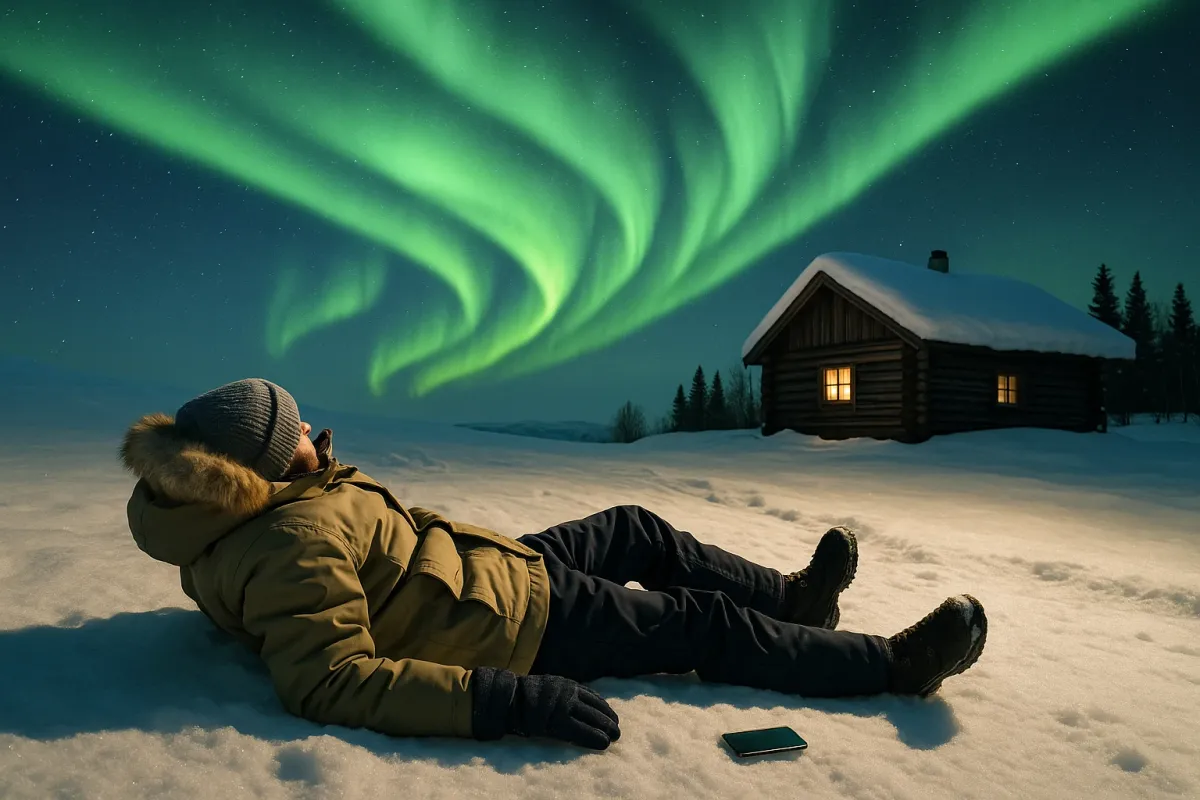
If your social feed is suddenly full of green skies over Iceland and Norway, you’re not imagining it. Northern Lights travel is having a moment. Recent guides and photo essays are going viral as travelers share their bucket‑list aurora shots from Nordic regions, echoing articles like “The Best Places And Times To See The Northern Lights From My Own Experience.”
Behind the gorgeous photos is a quieter story: to see the aurora borealis, people are restructuring their routines around darkness, cold, and slowness. They’re sleeping differently, eating differently, and spending long, quiet hours under the night sky. In other words—whether they mean to or not—they’re running a live experiment in nervous‑system reset.
Here’s what this global fascination with the Northern Lights can teach us about wellness right now, and how to borrow the benefits even if you never leave your couch.
1. Real Darkness Is Becoming a Luxury (And Your Hormones Notice)
Aurora chasers have to leave bright cities, avoid light pollution, and let their eyes adjust to the dark. That’s not just good for photography—it’s a powerful cue for your biology.
Melatonin, the hormone that helps regulate your sleep‑wake cycle, is suppressed by artificial light, especially blue light from screens and LEDs. Studies show that evening exposure to bright screens can delay melatonin onset and shorten deep sleep time, even in young, healthy people (Chang et al., PNAS, 2015).
When travelers head to dark Nordic landscapes, they’re unintentionally practicing “dark therapy”:
- Fewer streetlights, ads, and building lights
- Longer periods in near‑total darkness
- Less screen time while waiting outside for the aurora
You can’t move to rural Iceland tomorrow, but you can reclaim more darkness:
- Dim lights 60–90 minutes before bed.
- Use warm, low‑blue bulbs in lamps instead of bright overhead LEDs.
- Enable night mode/blue‑light filters on all devices after sunset.
- Try a consistent “screens off” time every night (even 30 minutes helps).
Supplements like magnesium, glycine, and melatonin are often marketed as sleep solutions, but they work best when they stack on top of healthy light habits—not instead of them.
2. Cold, Controlled Stress Can Build a Calmer Brain
Watching the Northern Lights often means standing in the cold for long stretches. That environmental stress is uncomfortable—but in a controlled way. It’s not so different from the voluntary cold exposure trends (cold plunges, winter swims) that have exploded across wellness communities.
Short, controlled cold exposure has been shown to:
- Increase norepinephrine, a neurotransmitter linked to focus and mood (Janský et al., Eur J Appl Physiol, 1996).
- Improve stress resilience through hormesis (the concept that small, manageable stressors build long‑term adaptability).
- Potentially support metabolic health by activating brown fat, which burns calories to produce heat.
You don’t need an ice bath in your backyard to gain some of these benefits:
- Finish your shower with 15–60 seconds of cool or cold water.
- Take brisk walks outside in cooler weather with appropriate clothing.
- Reduce indoor overheating—slightly cooler bedrooms are linked with better sleep quality.
If you’re pairing this with supplements (for example, omega‑3s for inflammation or L‑theanine for calm focus), remember: physiology comes first. The supplement supports the adaptation—cold exposure is the signal.
3. Awe Is a Mental Health Tool, Not Just a Travel Emotion
Ask anyone who’s seen the aurora in person, and you’ll hear the same word over and over: awe. Psychologists are increasingly interested in awe as a distinct emotional state with measurable health effects.
Research suggests that experiences of awe can:
- Reduce markers of inflammation (Stellar et al., Emotion, 2015).
- Increase feelings of connection and decrease self‑focused rumination.
- Improve life satisfaction and support lower levels of daily stress.
Northern Lights tourism is, fundamentally, an “awe‑seeking” industry. People travel long distances, stay up late, and endure cold simply for the chance to feel small under a big sky.
You don’t need a flight to Tromsø to access awe:
- Go somewhere with a wide view (a hill, rooftop, lake, or even a city lookout) and spend 10–15 minutes just observing—no phone.
- Seek out “micro‑awe” daily: a sunrise, a tree in your neighborhood, a powerful piece of music, or a time‑lapse of the night sky.
- Try short, guided “awe walks”—walking slowly with the intention of noticing vastness, beauty, or complexity around you. A 2020 study in Emotion found that weekly 15‑minute awe walks boosted positive emotions in older adults.
Nootropic supplements can sharpen attention, but awe states naturally shift your focus outward and away from anxious loops. Think of awe as a free, side‑effect‑free mental reset button.
4. Circadian Rhythm Is a Bigger Deal Than Most Wellness Trends
Nordic travelers quickly realize how different life feels when daylight is brief and nights are long. Locals are experts at managing extreme seasonal light changes—using routines, indoor lighting, and sometimes targeted light therapy to keep mood and energy stable.
This has direct implications for the rest of us heading into winter:
- Disrupted circadian rhythm is strongly associated with mood disorders, fatigue, and metabolic issues.
- Light in the morning is especially powerful for setting your internal clock. Just 10–30 minutes of outdoor light shortly after waking can improve sleep quality and daytime alertness (even on cloudy days).
Borrow a page from Nordic life:
- Get outside within 1–2 hours of waking, even if it’s chilly.
- If your mornings are dark, consider a certified 10,000‑lux light box used as directed (often 20–30 minutes soon after waking; check with your clinician if you have bipolar disorder or eye conditions).
- Keep wake/bed times relatively consistent, even on weekends.
Supplements often marketed for seasonal mood—vitamin D, omega‑3s, and sometimes saffron or standardized herbal extracts—are best viewed as supporting actors. The main director of your energy and mood is still your circadian rhythm, and that depends heavily on light exposure and timing.
5. Slowness and Waiting Are Underestimated Recovery Tools
Aurora tourism is full of waiting: long drives, quiet hours in parked vans, and standing still under cold skies. Ironically, in chasing a dramatic natural event, people are forced into extended periods of low stimulation.
Modern wellness often adds more—more workouts, more apps, more challenges. But nervous systems also heal in the spaces between stimuli:
- Low‑input time (quiet, minimal notifications, no multitasking) allows the brain’s default mode network and glymphatic system to do housekeeping and integration.
- Restorative, low‑effort focus (like watching a fire, the ocean, or the sky) aligns with Attention Restoration Theory, which suggests that “soft fascination” supports mental fatigue recovery.
You can create your own “aurora waiting room” at home:
- Schedule 10–20 minutes of no‑goal time daily: sit by a window, on a balcony, or in a park with your phone on airplane mode.
- Replace one “background screen” habit (scrolling while eating, watching a show while answering emails) with a single‑task activity.
- Use simple breathwork (e.g., 4 seconds in, 6 seconds out for 3–5 minutes) to cue your nervous system into a more parasympathetic, rest‑and‑digest state.
Adaptogens like ashwagandha or rhodiola are often marketed as “stress hacks,” but their impact is modest compared with consistent recovery practices. Think of supplements as gentle nudges—your real progress comes from how often you truly let your system idle.
Conclusion
The trending photos from Northern Lights hotspots are more than travel inspiration. They’re a live case study in what happens when people:
- Step into real darkness
- Face gentle, controlled cold
- Seek out awe
- Respect their circadian rhythm
- Allow long stretches of quiet waiting
You don’t need to book a flight to see meaningful changes in your own wellness. Start by asking: How can I bring more darkness, awe, natural light, cold, and unstructured time into my week?
Once those foundations are in place, supplements can become powerful, precisely‑targeted allies—not quick fixes. And that’s the kind of everyday “Northern Lights effect” that doesn’t fade when the sky goes back to black.
Key Takeaway
The most important thing to remember from this article is that this information can change how you think about Wellness.