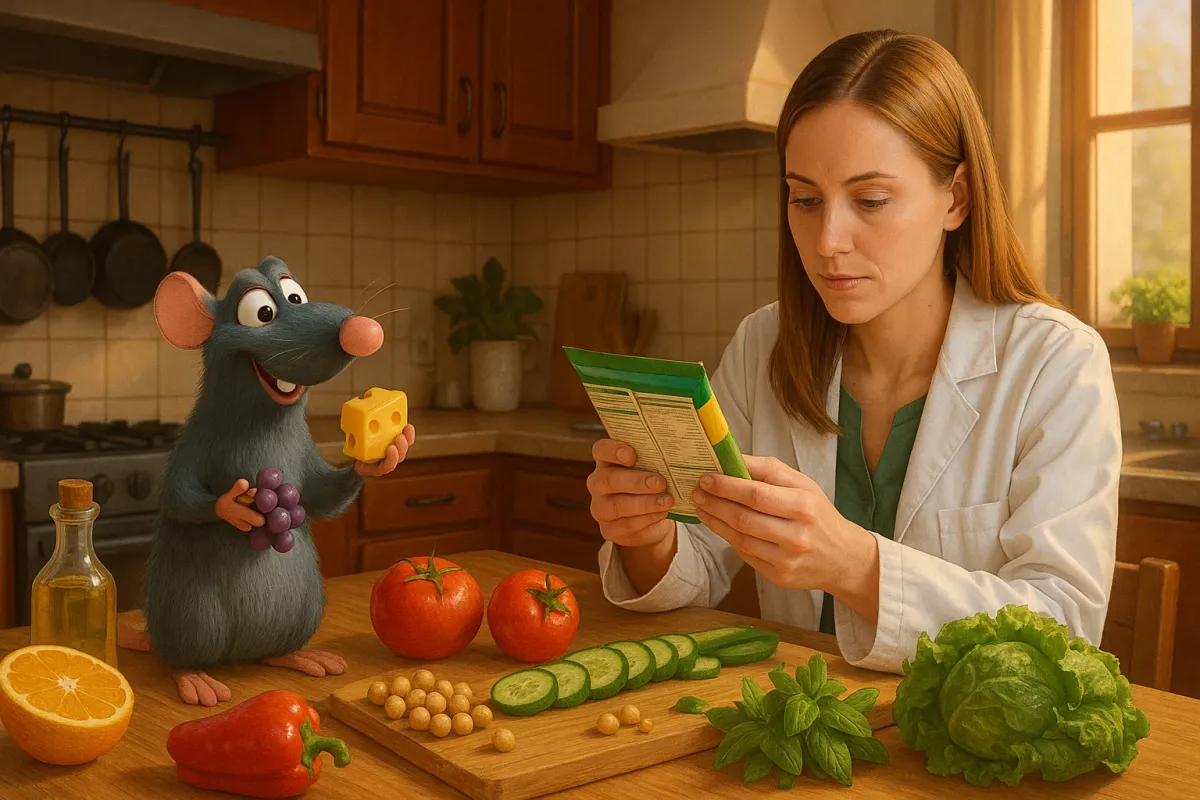
When Ratatouille hit theaters, it did more than introduce us to a cooking rat named Remy—it quietly reshaped how a generation thinks about food. The film has gone viral again this week thanks to a trending “hidden details” thread, with fans dissecting everything from tiny kitchen Easter eggs to the way it portrays flavor, creativity, and French cuisine.
All that nostalgia is landing in a moment when people are more curious than ever about what’s actually on their plates. So let’s use this renewed Ratatouille buzz to ask a simple question:
What does this beloved food movie get right—and wrong—about nutrition in real life?
Below are five evidence-based takeaways you can apply in your own kitchen, no Michelin star (or talking rodent) required.
1. “Anyone Can Cook” — But Healthy Eating Starts With Basic Skills
Ratatouille’s core message, “Anyone can cook,” isn’t just heartwarming—it’s surprisingly accurate from a public‑health perspective. Research consistently shows that basic cooking skills are linked to better diet quality, more fruit and vegetable intake, and lower consumption of ultra‑processed foods.
- A 2022 review in Nutrients found that adults who cook at home more often tend to eat fewer calories, less sugar, and less saturated fat compared with people who rely heavily on restaurant and take‑away meals.
- Cooking confidence also matters: studies show that people who believe they can cook simple meals are more likely to stick to healthier eating patterns over time.
What the movie romanticizes is the speed of transformation. In reality, “anyone can cook” means:
- Starting with 2–3 go‑to meals (like a simple vegetable omelet, a sheet‑pan chicken dinner, or a bean‑based chili).
- Getting comfortable with knives, heat, and timing—not with elaborate French sauces on day one.
- Learning one new skill at a time: roasting vegetables, making a basic vinaigrette, or cooking whole grains.
You don’t need to be Remy. You just need enough skills to make home‑cooked food a realistic default most days.
Practical step: This week, pick one simple recipe you can make in under 30 minutes using mostly whole foods. Repeat it until it’s automatic. Skill, not perfection, is the real superpower.
2. The Ratatouille Dish Itself: A Near‑Perfect Example of Plant‑Forward Eating
The final dish that moves critic Anton Ego to tears—confit byaldi, a refined version of ratatouille—is more than cinematic comfort food. It’s also a quiet masterclass in Mediterranean‑style, plant‑forward nutrition.
Traditional ratatouille features:
- Eggplant
- Zucchini
- Tomato
- Bell pepper
- Onion
- Garlic
- Olive oil and herbs (thyme, basil, etc.)
From a nutrition standpoint, this combination delivers:
- High fiber: Supports gut health, blood sugar control, and satiety.
- Polyphenols and carotenoids: Antioxidant compounds linked to reduced risk of cardiovascular disease and some cancers.
- Healthy fats (from olive oil): Central to the Mediterranean diet, which has one of the strongest evidence bases for longevity and heart health.
- Low energy density: Lots of volume and nutrients for relatively few calories.
Large cohort studies—like the PREDIMED trial published in The New England Journal of Medicine—have shown that a Mediterranean-style eating pattern rich in vegetables, olive oil, legumes, and nuts can significantly reduce major cardiovascular events.
The movie gets one thing especially right: the emotional power of familiar vegetables prepared with real care. That’s a realistic, sustainable path to better eating.
Practical step: Use “movie ratatouille” as a template: choose 3–4 vegetables, slice, toss with olive oil, garlic, and herbs, then roast until tender. Serve over whole grains or alongside protein for a balanced meal.
3. Flavor Layering Is Real Science—And It Can Make Healthy Food Crave‑Worthy
One of the most shared “hidden details” about Ratatouille is how carefully it depicts professional flavor work: building sauces, toasting aromatics, and balancing acidity. That’s not just culinary drama—it mirrors how chefs make simple ingredients unforgettable.
From a nutrition standpoint, this matters because:
- People stick with healthier eating when food is enjoyable, not just “good for you.”
- Flavor complexity (through herbs, spices, acids, and umami‑rich ingredients) can make lower‑salt, lower‑sugar, or more plant‑heavy meals deeply satisfying.
Evidence backs this up:
- Studies show that herbs and spices can enhance perceived sweetness or savoriness without extra sugar or salt, helping people reduce sodium and added sugars while maintaining enjoyment.
- A 2020 trial in Nutrients found that using more herbs and spices improved acceptance of reduced‑fat or reduced‑sodium versions of common dishes.
What the movie exaggerates is the instant “fireworks” experience—real life is usually subtler. But the principle holds: thoughtful seasoning makes nutritious meals feel indulgent.
Practical step: When you cook vegetables or lean proteins, always ask: What’s my acid? What’s my herb or spice? A squeeze of lemon, a splash of vinegar, or a handful of fresh herbs can transform a simple dish while keeping it nutrient‑dense.
4. Portion Reality Check: Restaurant Plates vs. Home Plates
Gusteau’s restaurant in Ratatouille serves small, artfully plated portions—very different from the oversized servings many of us see in real‑world restaurants today.
This is one place where the film’s fantasy diverges sharply from current nutrition challenges:
- Observational data suggest that restaurant portions—especially in the U.S. and parts of Europe—often exceed typical dietary guidelines for a single meal in calories, sodium, and saturated fat.
- Large plate sizes and “more value” marketing can lead to passive over‑eating. People typically eat more when served more, even without noticing.
Why this matters now: as home cooking surged during the pandemic and then gave way to a resurgence of takeout and dining out, understanding portion distortion has become critical for people trying to manage weight, blood sugar, or heart health.
The Ratatouille kitchen quietly reinforces three useful ideas:
- Portion composition matters: A small portion that’s mostly vegetables and lean protein can be perfectly satisfying.
- Presentation isn’t just vanity: When food looks appealing and is eaten mindfully at a table (not from a container on the couch), we’re more likely to notice fullness cues.
- Intensity over volume: Deeply flavored food can feel more satisfying in smaller amounts.
Practical step: At restaurants, mentally “plate it like Gusteau’s”:
- Visualize half the plate as vegetables, a quarter as protein, a quarter as starch.
- Box part of oversized mains before you start eating, not after.
5. The Missing Piece: Food Safety and Ultra‑Processed Foods
The internet loves to joke about the food safety nightmare of a rat in the kitchen—and of course, in real life, that would shut down any restaurant. But the current Ratatouille nostalgia wave is a good reminder that two real‑world issues rarely get the Hollywood treatment:
A. Food Safety Still Matters at Home
While we’re not battling animated rodents, everyday kitchen hygiene does affect health:
- Undercooked meats, unwashed produce, and poor handwashing remain major sources of foodborne illness.
- The CDC estimates that each year, millions of people worldwide get sick from foodborne pathogens like Salmonella, E. coli, and Campylobacter.
Basic habits—washing hands and cutting boards, cooking meats to safe temperatures, and refrigerating leftovers promptly—aren’t glamorous, but they’re part of true “healthy cooking.”
B. The Real Villain Is Often Ultra‑Processed Food, Not Butter
Some viewers assume French‑style cooking must be “unhealthy” because of butter and rich sauces. Yet population data consistently show that traditional diets built on minimally processed ingredients—even when they include modest amounts of butter or cheese—tend to fare better than modern patterns high in ultra‑processed foods.
Current evidence points to:
- Higher intake of ultra‑processed foods (packaged snacks, sugary drinks, many ready‑to‑eat meals) being associated with increased risks of obesity, cardiovascular disease, and all‑cause mortality.
- Mechanisms likely include excess added sugars, refined starches, certain additives, and the way these foods affect satiety and reward pathways.
In Ratatouille, nearly everything is made from scratch using basic ingredients. That’s much closer to what nutrition research supports than a diet heavy in packaged, “hyper‑palatable” convenience foods.
Practical step: Aim for what some researchers call a “minimally processed default”:
- Base most meals on whole or minimally processed foods (vegetables, fruits, whole grains, legumes, nuts, eggs, plain dairy, fresh or frozen meats/fish).
- Use more processed foods strategically (e.g., canned beans, frozen vegetables, plain yogurt) rather than as the main event.
Conclusion
The renewed fascination with Ratatouille’s hidden details is more than a fun internet trend—it’s an invitation to look more closely at our own relationship with food.
Beneath the animation and fantasy, the film quietly champions ideas that modern nutrition science strongly supports:
- Basic cooking skills as a foundation for better health
- Plant‑forward, Mediterranean‑style dishes like ratatouille itself
- Flavor layering with herbs, spices, and healthy fats
- Mindful portions and intentional plating
- Whole, minimally processed ingredients as the true stars
You don’t need a Parisian kitchen or a culinary‑genius rat on your shoulders to benefit from these principles. Start with one small change—a simple vegetable‑heavy dish, a new herb, a smaller plate, or one less ultra‑processed snack—and build from there.
In the end, the most powerful lesson from Ratatouille might be this: what you cook at home, day after day, quietly shapes your health far more than any dramatic “before and after” story. And yes—anyone can learn to cook that kind of future.
Key Takeaway
The most important thing to remember from this article is that this information can change how you think about Nutrition.