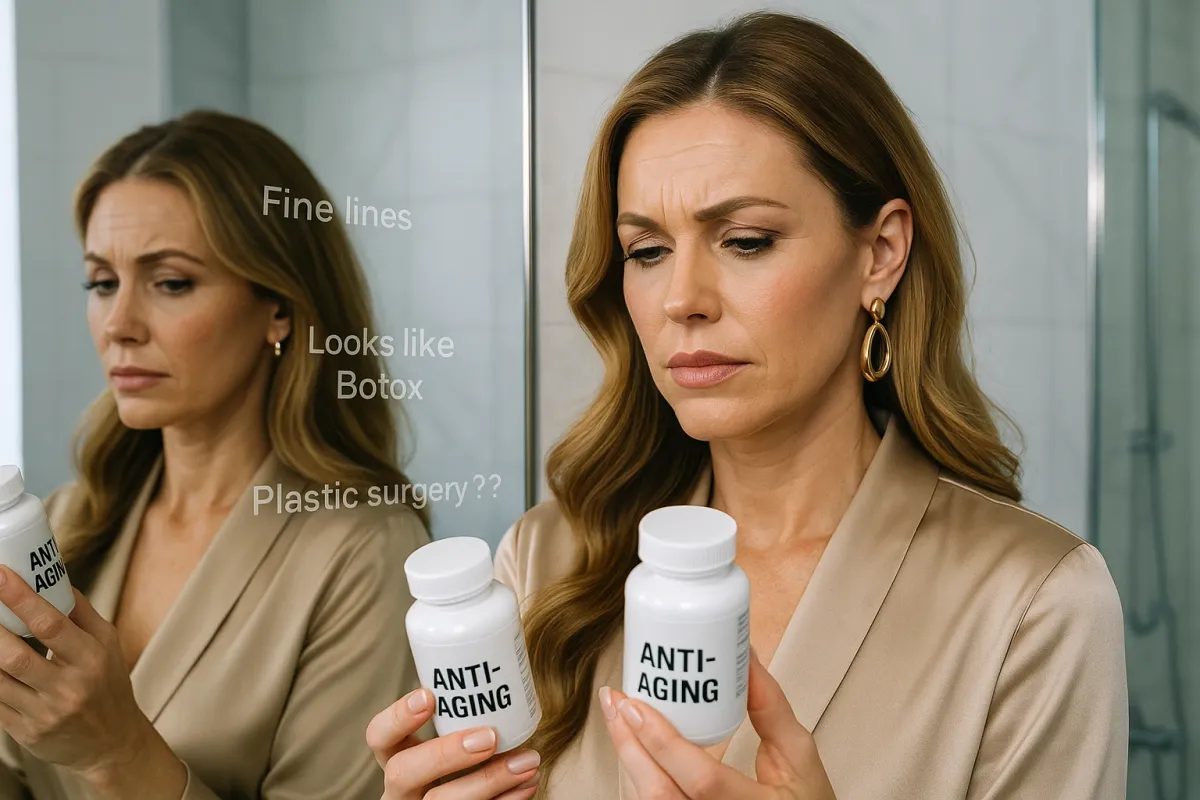
When Emily Blunt’s recent podcast appearance with Rose Byrne sparked a wave of plastic surgery rumors, social media did what it always does best: zoomed in, speculated, and demanded “the secret.” Some fans insisted it must be surgery. Others swore it was just “good genes” and skincare. Almost inevitably, another camp pointed to supplements and “miracle” anti‑aging pills as the explanation.
For a health‑conscious person, this kind of celebrity moment is more than gossip—it shapes what many people buy and swallow the next day. Collagen powders, “skin glow” gummies, and longevity capsules often ride the same wave of hype that fuels Hollywood rumor cycles.
At Eleven Suplements, we want to separate appearance‑driven fantasy from what the science actually says. Here’s what current research suggests about supplements, skin aging, and healthy longevity—and where expectations need a reality check.
1. Supplements Cannot Replace (or Replicate) Plastic Surgery
When a celebrity’s face changes, we tend to look for a singular cause: filler, facelift, or a “magic” product. In reality, facial aging is driven by a complex mix of genetics, bone structure, fat redistribution, sun exposure, lifestyle—and yes, sometimes medical or cosmetic procedures. No supplement can lift tissue, reposition fat pads, or tighten loose skin to the degree that surgery or injectables can.
What supplements can do, at best, is support the biological processes that maintain skin structure and resilience. For instance, vitamin C is essential for collagen synthesis, and deficiencies in nutrients like protein, vitamin A, zinc, and essential fatty acids can clearly harm skin health. But correcting or optimizing these doesn’t give a facelift; it helps your skin function normally and possibly age more gracefully. Systematic reviews on “anti‑aging” supplements consistently find modest, supportive benefits, not dramatic reversal of aging.
If a product implies you’ll get “celebrity‑level” transformation from a capsule, it’s overselling. Think of supplements as background support for the tissue, not a replacement for medical or cosmetic interventions.
Key takeaway: Supplements may help your skin perform at its best—but they don’t remodel your face.
2. Collagen, Hyaluronic Acid & “Beauty From Within”: What the Evidence Actually Shows
Whenever facial changes hit the trending tab, collagen and hyaluronic acid supplements tend to trend alongside them. Brands market them as internal equivalents of dermal fillers or skin tightening—so what does the science say?
Collagen peptides
- Multiple randomized controlled trials (RCTs) have found that daily oral collagen peptides (often 2.5–10 g/day) can modestly improve skin hydration, elasticity, and wrinkle depth over 8–12 weeks in middle‑aged adults.
- A 2021 meta‑analysis in the International Journal of Dermatology concluded that collagen supplements show “promising” benefits for skin aging markers, but emphasized small effect sizes and variability in study quality.
- Benefits appear to be gradual and subtle—not the kind of dramatic contour change that triggers plastic surgery speculation online.
Hyaluronic acid (HA)
- Oral HA (e.g., 120–240 mg/day) has been shown in some small RCTs to improve skin hydration and reduce dryness, likely by supporting the skin’s water‑binding capacity.
- These changes are largely textural and moisture‑related. They don’t reshape facial features like injectable HA fillers do.
“Glow” and “firmness” claims
- Most “beauty blend” products combine collagen, HA, vitamin C, biotin, and antioxidants. While many of these ingredients are important for skin physiology, their combined effect still falls into the category of modest improvements for some people, not wholesale reinvention.
- Studies typically last only a few months and are often industry‑funded; long‑term independent data are still limited.
Key takeaway: Collagen and HA can support skin hydration and elasticity, particularly if your diet or skin is already under strain—but their effects are incremental, not celebrity‑level transformations.
3. Antioxidant Supplements: Helpful Support or Overhyped “Youth Pills”?
Every time a new photo of an ageless celebrity circulates, “antioxidants” trend alongside retouched screenshots. Vitamin C, E, resveratrol, coenzyme Q10, and green tea extracts are frequently marketed as anti‑aging essentials. The idea is appealing: neutralize free radicals, slow down skin and cellular aging. The reality is more nuanced.
What the research supports
- Vitamin C and E: Adequate levels are crucial for protecting skin from oxidative stress. Topical vitamin C is strongly supported for photodamage; oral intake helps when there is deficiency or high oxidative load.
- Carotenoids (beta‑carotene, lycopene, lutein): Supplementation can modestly improve skin’s resistance to UV‑induced redness and contribute to a more even tone in some studies.
- Polyphenols (green tea, resveratrol): Show anti‑inflammatory and antioxidant effects in lab and small human studies, with some evidence for modest improvements in skin roughness and elasticity.
Important cautions
- High‑dose antioxidant supplementation (especially in smokers or people with certain conditions) has sometimes produced neutral or even negative outcomes in large trials, including increased cancer risk in specific contexts. More is not always better.
- Antioxidant supplements cannot undo structural changes that have already occurred or fully counter chronic UV exposure, sleep deprivation, or smoking.
- Whole foods rich in antioxidants consistently show stronger associations with longevity and skin health than isolated high‑dose pills.
Key takeaway: Antioxidants can be useful as part of a broader nutrition plan, but they are not age‑reversing pills and should be used thoughtfully, not mega‑dosed.
4. The “Skin–Gut–Hormone” Connection Matters More Than Any Single Pill
When we see a celebrity’s face trending, we focus on the surface. But dermatology and endocrinology research keep reminding us that skin reflects deeper systems—especially the gut, metabolism, and hormones. Some of the most promising supplement strategies are those that target these underlying pathways instead of promising to “erase wrinkles.”
Gut health & skin
- A disrupted gut microbiome has been linked to inflammatory skin conditions such as acne, psoriasis, and atopic dermatitis.
- Probiotics and prebiotics have shown modest benefits in some trials for acne severity and skin barrier function, though the effects vary widely by strain and individual.
- A 2020 review in Nutrients described the “gut–skin axis” as a key area of emerging research, with early evidence suggesting that optimizing gut health (partly via diet and targeted supplements) may reduce systemic inflammation that accelerates visible aging.
Hormones & metabolic health
- Chronic blood sugar spikes and insulin resistance can contribute to glycation—where sugar binds to collagen and elastin, making them stiffer and more breakable, accelerating wrinkles and sagging.
- Nutrients like magnesium, chromium, alpha‑lipoic acid, and berberine (used under medical supervision) may support healthier glucose metabolism, indirectly benefiting skin over time.
- For women, perimenopause and menopause involve hormonal shifts that change skin thickness, elasticity, and hydration. Supplements like vitamin D, omega‑3s, and soy isoflavones may provide some support, though they are not hormone replacement therapy and should not be treated as such.
Key takeaway: Skin‑focused supplements are only part of the picture. Supporting gut, metabolic, and hormonal health often does more for long‑term skin quality than chasing individual “glow” products.
5. How to Evaluate “Celebrity‑Level” Supplement Claims Responsibly
When paparazzi photos or podcast stills ignite debate, supplement marketing often follows with “Get X’s glow” or “Age like Y.” Before you buy into the promise, a few evidence‑based filters can keep you grounded.
Look for:
- Human clinical trials: Prefer products and ingredients tested in controlled human studies (not just cell or animal data), ideally with skin or aging outcomes measured objectively.
- Doses that match the research: Many products underdose key ingredients compared to what was actually used in studies. Marketing may cite research that doesn’t match what’s inside the bottle.
- Third‑party testing: Certifications like NSF, Informed‑Choice, or USP help ensure the product contains what it claims and is screened for contaminants.
- Realistic language: Phrases like “supports skin hydration,” “helps maintain collagen formation,” and “may reduce the appearance of fine lines” are more credible than “erase,” “reverse,” or “turn back the clock.”
Be cautious with:
- Celebrity tie‑ins without data: A famous face using (or merely endorsing) a product is not evidence. Many celebrities also use professional treatments, specialized dermatology care, lighting, styling, and editing.
- One‑ingredient miracles: Skin aging is multifactorial; any product claiming that a single vitamin, peptide, or plant extract can “fix everything” is oversimplifying biology.
- Stacking too many products: Overlapping formulations can push you into unnecessarily high doses of certain nutrients (like vitamin A, niacin, selenium, or zinc), which can cause side effects over time.
Key takeaway: The more a supplement leans on celebrity imagery and dramatic before‑and‑afters instead of solid, transparent research, the more skeptical you should be.
Conclusion
Celebrity plastic surgery rumors—like those recently swirling around Emily Blunt after her A24 podcast appearance—can make it feel like there’s a secret shortcut to looking younger. In reality, even the best‑studied supplements offer incremental support, not dramatic transformation. Collagen, hyaluronic acid, antioxidants, and gut‑supporting nutrients can all play a meaningful role in how your skin ages, but only when they’re part of a bigger picture: nutrient‑dense food, sun protection, sleep, stress management, and realistic expectations.
For health‑conscious readers, the goal isn’t to chase a celebrity’s face; it’s to give your own skin and body what they need to age as well as possible for you. Use supplements as targeted tools, not magic wands—and let headlines be a prompt to ask better questions, not a reason to panic‑buy the latest “youth in a bottle.”
Key Takeaway
The most important thing to remember from this article is that this information can change how you think about Supplements.