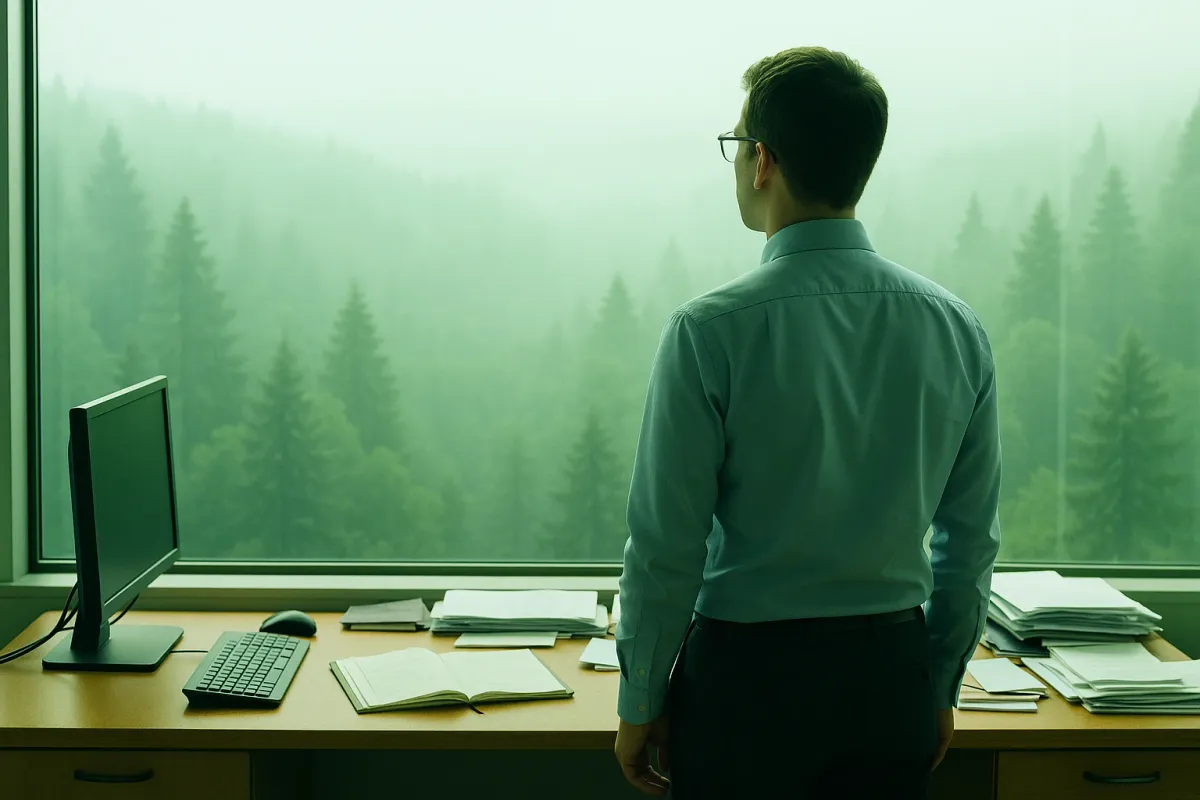
The latest winners of Nature Photographer of the Year 2025 are lighting up social feeds right now—and for good reason. These images aren’t just beautiful; they’re a real‑time reminder of something science has been quietly showing for years: spending time in nature changes your body and brain in measurable ways.
At Eleven Suplements, we’re always digging into what actually moves the needle for energy, focus, and long‑term health. With nature photography trending again thanks to contests like Nature Photographer of the Year and Wikimedia Commons’ Picture of the Year, it’s a perfect moment to look at what the research says about “nature exposure” and how to combine it with smart nutrition and supplements.
Below are five evidence‑based insights you can use right now—whether you’re hiking in real forests or scrolling past them on your phone between meetings.
Nature Lowers Stress Hormones (And Not Just A Little)
The kind of landscapes you see in the 2025 Nature Photographer of the Year winners—dense forests, wide shorelines, quiet mountains—don’t just feel calming. They have reproducible physiological effects.
Multiple studies show that time in natural environments lowers:
- Cortisol (a primary stress hormone)
- Heart rate and blood pressure
- Sympathetic nervous system activity (the “fight or flight” arm)
A meta‑analysis in Frontiers in Psychology (2019) found that as little as 20–30 minutes in nature can significantly reduce salivary cortisol levels. Japanese “forest bathing” (shinrin‑yoku) research shows similar effects: participants who took forest walks had lower cortisol and pulse rates than those walking in urban environments, even when the distance and pace were the same.
How to apply it:
- Aim for 20–30 minutes outside in green space at least a few days per week—no workout required; slow walking or sitting is enough.
- If you’re using adaptogens like ashwagandha or L‑theanine for stress, pair them with a brief “nature break” walk. The supplement targets your internal stress response; the environment removes external “threat” signals (noise, traffic, notifications).
- For people with high‑stress jobs, even a tree‑lined route to work or lunch in a park can help smooth cortisol peaks across the day.
- Hunter et al., Frontiers in Psychology, 2019
- Park et al., Environmental Health and Preventive Medicine, 2010
Key references:
Green and Blue Spaces Sharpen Attention and Mental Fatigue
Scrolling through the top entries from Nature Photographer of the Year—especially the “intimate landscapes” and quiet water scenes—hints at a key concept in psychology: Attention Restoration Theory (ART).
ART suggests that nature helps your brain shift from directed attention (effortful, “focus hard on this task”) to soft fascination (effortless attention—like watching waves or leaves). This switch:
- Reduces mental fatigue
- Improves working memory
- Supports sustained attention when you return to work or study
Randomized trials back this up:
- A study in Psychological Science found that a 50‑minute walk in nature improved memory and attention more than a walk in a dense urban area.
- Even window views of green space are associated with better cognitive performance in children and adults compared to views of buildings and parking lots.
How to apply it:
- If you use cognitive support supplements—like citicoline, L‑tyrosine, or certain nootropic blends—add structured “nature intervals” to your work blocks: 5–10 minutes of looking at trees, sky, or water after 60–90 minutes of deep work.
- If you’re stuck indoors, use high‑quality natural imagery (yes, those award‑winning photos help): research shows that realistic nature images and sounds can partially mimic the restorative effect.
- For students, studying in a park or near large windows facing green spaces can enhance the effect of good sleep, nutrition, and any focus‑support supplements.
- Berman et al., Psychological Science, 2008
- Bowler et al., Environmental Science & Technology, 2010
Key references:
Natural Light Syncs Your Body Clock (And Your Supplement Timing)
Many of the winning images from global nature photography competitions highlight the quiet power of sunrise, sunset, and twilight. These aren’t just pretty times of day—they’re powerful timing cues for your circadian rhythm, the internal 24‑hour clock that controls:
- Sleep quality
- Hormone release (including cortisol and melatonin)
- Appetite and blood sugar control
- Energy levels and mood
Research shows that:
- Morning outdoor light (especially within 1–2 hours of waking) helps anchor your circadian rhythm, making it easier to fall asleep at night.
- Exposure to natural light during the day improves alertness and may reduce the afternoon energy slump.
- People with more daylight exposure tend to sleep longer and report better sleep quality than those mostly under artificial light.
Why this matters for supplements:
Many evidence‑based supplements are time‑sensitive:
- Melatonin works best when your circadian rhythm is already reasonably aligned; daylight exposure makes it more effective and may allow for lower doses.
- Caffeine works more predictably when your sleep–wake cycle is stable; if you get morning light, you may rely less on late‑day caffeine “rescues.”
- Nutrients involved in clock regulation—like magnesium, vitamin D, and omega‑3s—support a system that light is constantly cueing.
How to apply it:
- Combine your morning supplements with a 10–20 minute outdoor light exposure: balcony, garden, or walk—even on cloudy days.
- If you use sleep‑support supplements (e.g., magnesium glycinate, low‑dose melatonin), pair them with a “sunset habit”: dim lights indoors, avoid bright screens, and—when possible—step outside briefly around dusk.
- Use nature photos of dawn/dusk as lock‑screen reminders: when you see them, step outside for a few minutes if you can.
- Wright et al., Current Biology, 2013
- Chang et al., PNAS, 2015
Key references:
Micro-Doses Of Nature Improve Mood And Anxiety
The emotional impact of the 2025 award‑winning nature images—especially wildlife and “quiet moments” in remote places—mirrors findings in mental health research.
Studies consistently show that even small, frequent doses of nature are linked to:
- Lower risk of depression and anxiety
- Better self‑reported wellbeing
- Reduced feelings of rumination (repetitive negative thinking)
In one study published in Scientific Reports, spending at least 120 minutes per week in nature (in any combination of short visits) was associated with significantly better health and wellbeing. Interestingly, the benefit plateaued after about 200–300 minutes, suggesting you don’t need to move to the wilderness—just reach a weekly “minimum dose.”
How this interacts with nutrition and supplements:
- Omega‑3 fatty acids (EPA/DHA) have evidence for supporting mood. Combining them with regular green space time may provide complementary support—internal biochemical balance plus external emotional buffering.
- Vitamin D levels are often low in people with depression. Outdoor time provides light (which supports mood) and, when UV index allows and skin is exposed, some vitamin D synthesis—though supplementation is usually still needed in many regions.
- Botanical support like saffron extract or rhodiola may pair well with consistent nature exposure for mild mood support, but neither should replace professional help for moderate or severe depression.
How to apply it:
- Aim for a weekly “nature budget” of 120 minutes: that can be 20 minutes, 6 days a week, or slightly longer sessions on weekends.
- Track mood alongside both supplement routines and outdoor time for 2–4 weeks. Many people discover that small tweaks outdoors rival adding yet another capsule.
- If you’re working with a therapist or clinician, discuss integrating structured nature exposure as part of your overall plan—it’s increasingly recognized in clinical guidelines.
- White et al., Scientific Reports, 2019
- Bratman et al., PNAS, 2015
Key references:
Real Nature Beats Virtual—But Images Still Have Measurable Benefits
Given the explosion of high‑resolution nature photography—from Nature Photographer of the Year to Wikimedia’s Picture of the Year—one important research question is: How much does virtual nature actually help?
The evidence:
- Real, outdoor nature consistently outperforms images or videos in lowering physiological stress markers and boosting mood.
- However, high‑quality nature images and sounds still show benefits compared to urban scenes or neutral stimuli: reduced anxiety, better perceived restoration, and sometimes small improvements in cognitive performance.
- Hospital and workplace studies show that simply adding nature imagery to walls and screens can positively influence stress and satisfaction.
This matters because not everyone can step into a forest, coastline, or mountain trail whenever they want. People in dense cities, with mobility limitations, or working night shifts can still leverage some of the effect.
How to apply it alongside your health routine:
- Use real outdoor time as your “gold standard,” and digital nature as a backup—not a replacement.
- Pair indoor workouts and supplement routines (like pre‑workout mixes or electrolyte support) with nature visuals and sounds: think treadmill walking while watching high‑quality nature footage rather than random TV.
- In high‑stress indoor jobs, convert break spaces—even on a small scale—with plants, natural light if possible, and rotating displays of calming, award‑winning nature photography.
- Kahn et al., Environment and Behavior, 2008
- Yin et al., International Journal of Environmental Research and Public Health, 2020
Key references:
Conclusion
The global fascination with competitions like Nature Photographer of the Year 2025 isn’t just about aesthetics—it’s a reflection of how deeply our brains and bodies are wired for natural environments.
The research is remarkably consistent:
- Nature calms stress systems
- Restores focus and attention
- Aligns your body clock
- Supports mood and emotional regulation
- And even in digital form, offers measurable (if smaller) benefits
Supplements, smart nutrition, and structured training absolutely have their place. But if your health stack lives entirely in bottles and apps, you’re leaving one of the most powerful, low‑cost interventions on the table.
Think of nature as a foundational “supplement”:
- Evidence‑based
- Widely accessible in some form
- Synergistic with many of the nutrients and formulas you already use
As those 2025 award‑winning images circulate on your feed, let them be more than inspiration. Use them as a prompt to ask a simple, research‑backed question: “Where is my next 20 minutes of real nature coming from?”
Key Takeaway
The most important thing to remember from this article is that this information can change how you think about Research.