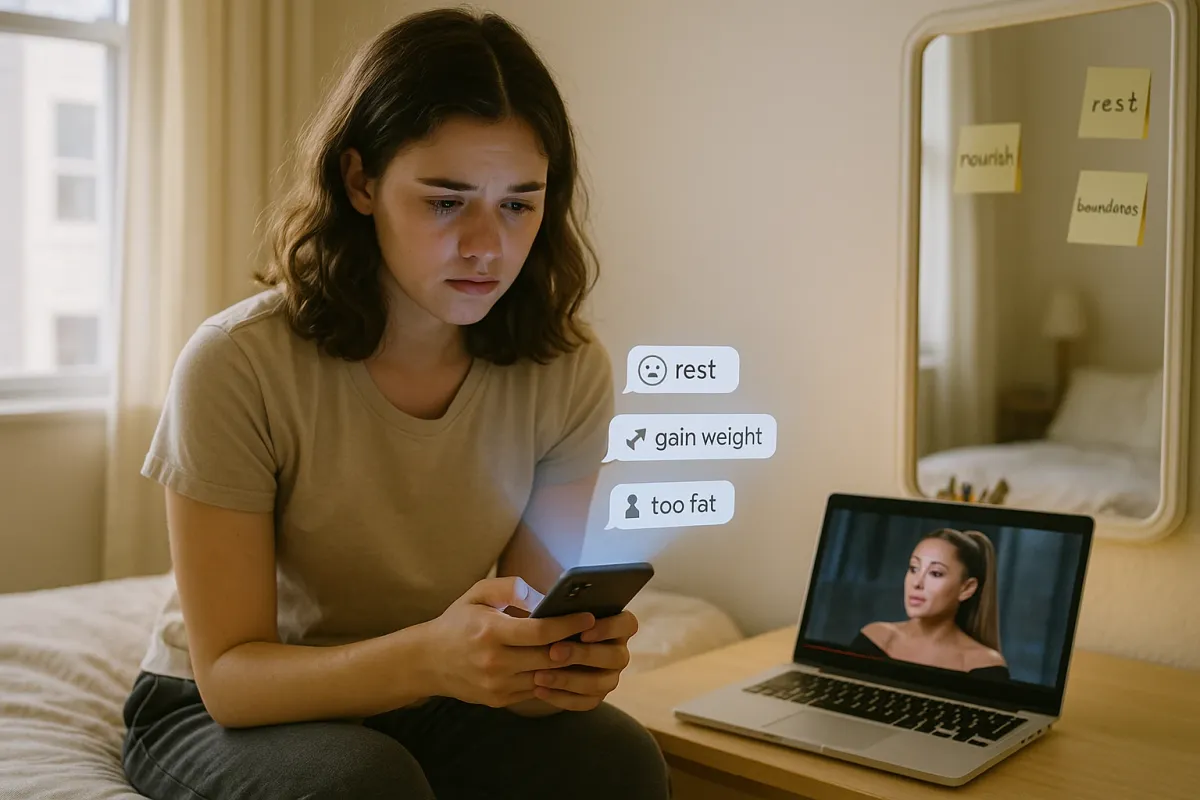
Ariana Grande’s recent pushback against “horrible” body comments — followed by a family member saying she’s “not in a healthy place” — has reignited a tough but important conversation: what actually counts as wellness when the internet feels entitled to your body?
While most of us aren’t global pop stars, the pressures are surprisingly similar: constant comparison, unsolicited “concern” about our weight or appearance, and the idea that looking “better” automatically means being healthier. For health‑conscious people, it can be confusing to know where real self‑care ends and performative wellness begins.
Below are five evidence‑based lessons we can take from stories like Ariana’s right now — especially if you’re trying to care for your body, protect your mental health, and filter out the noise.
Wellness Starts Where the Camera Stops: Why Health Isn’t a “Before & After”
Public reactions to Ariana’s changing appearance show how deep our visual bias runs: people assumed they could tell if she was well or unwell based on a photo.
But research is very clear: body size and visible appearance give only a partial — and sometimes misleading — picture of health.
What the science actually says:
- *Weight is a risk factor, not a diagnosis. Large population studies show that both high and low BMI can be associated with health risks, but they don’t tell us about an individual person’s habits, genetics, or mental health.
- Metabolic health matters more than aesthetics. Measures like blood pressure, blood lipids, HbA1c, fitness level, and sleep quality correlate much more strongly with long‑term health than “looking toned” or “looking skinny.”
- Rapid body changes, in either direction, are red flags. Significant, fast weight loss or gain is often linked to stress, depression, disordered eating, medication changes, or underlying illness.
How to apply this:
- Track health markers you can’t see in the mirror: energy through the day, strength, endurance, digestion, sleep, mood, and lab values if you have access to them.
- Be cautious about complimenting or critiquing weight loss or gain — even in yourself. Instead, focus on function (“I can carry my groceries more easily,” “I’m less winded on stairs”).
Wellness is not how you look in a single photo — it’s how your body and mind are functioning over weeks and months.
The Hidden Cost of Body Commentary: Your Nervous System Is Listening
Ariana’s frustration about how people talk about her body echoes what many experience online: “concern” that doesn’t feel caring at all. Neuroscience shows why this hits so hard.
Why comments hurt more than we think:
- Social rejection and physical pain share brain pathways. fMRI studies show that exclusion and harsh judgment light up many of the same regions as physical pain. Your brain treats intense criticism as a survival threat.
- Chronic body scrutiny can keep you in “fight or flight.” Constant vigilance about how you look (especially under public or social‑media pressure) can elevate cortisol and sympathetic nervous system activity, affecting sleep, appetite, and hormone balance.
- Self‑criticism amplifies the effect. When external comments reinforce your inner critic, it increases risk for anxiety, depression, and disordered eating patterns.
Protective strategies:
- Audit your feeds: mute or unfollow accounts that make you regularly feel “less than,” even if they’re popular “health” pages.
- After exposure to triggering content, deliberately activate the parasympathetic (rest‑and‑digest) system with slow breathing (e.g., 4 seconds in, 6–8 seconds out, for 2–5 minutes).
- Shift your self‑talk from appearance‑focused (“I look awful today”) to behavior‑ or values‑focused (“I’m proud I still did my walk even on a hard day”).
You can’t fully control what others say, but you can build a buffer by curating what you see and how you speak to yourself.
When “Healthy Habits” Become Harmful: Spotting the Line into Obsession
Celebrities are often praised for “discipline” and “clean eating,” but the same behaviors can slide into obsession — something that can happen to any health‑conscious person.
Clinicians now talk more about orthorexia: an unhealthy fixation on eating “perfectly,” or obsessively optimizing every aspect of health.
Warning signs your wellness routine may be drifting off‑course:
- You feel anxious, guilty, or ashamed after breaking a food or exercise rule.
- Social life shrinks because you’re afraid of “uncontrolled” meals or missing workouts.
- You routinely ignore pain, exhaustion, or illness to “stick to the plan.”
- Rest days feel like failure instead of recovery.
- Your identity feels tied to being “the healthy one,” and you panic at any deviation.
Evidence‑based guardrails:
- The most robust data in nutrition and physical activity show that consistency beats perfection. Long‑term, moderate, flexible habits are more protective than extreme regimens you can’t sustain.
- Psychologists recommend cognitive flexibility as a marker of well‑being: can you adapt when plans change, or does it undo you?
If your “healthy lifestyle” is making your world smaller, your anxiety higher, or your body more exhausted, it’s a sign to recalibrate — not to push harder.
Mental Health Is Health: Why Emotional Struggle Deserves the Same Urgency
Ariana’s family member noting she’s “struggling” with her health highlights something we still underplay: mental health is not secondary wellness; it is wellness.
What current evidence tells us:
- Depression and anxiety are strongly associated with higher risks of cardiovascular disease, diabetes, and poorer immune function. The brain–body link runs both directions.
- Chronic stress changes physiology: it can alter inflammatory pathways, sleep architecture, and even appetite hormones like leptin and ghrelin.
- Effective treatment for mental health challenges (therapy, medication when appropriate, structured lifestyle changes) often improves physical markers as well: blood pressure, heart rate variability, and inflammation.
Practical ways to treat mental health as core wellness:
- Give emotional symptoms the same seriousness as physical ones. If you wouldn’t ignore chest pain “because you’re busy,” don’t indefinitely ignore crippling anxiety or persistent low mood.
- Consider therapy, peer support, and structured routines as core wellness tools, not last resorts. Evidence‑based approaches like CBT, ACT, or interpersonal therapy can be as “therapeutic” as any supplement.
- Build mental health hygiene into your day: consistent sleep/wake times, light exposure in the morning, regular movement, and time for connection all have measurable effects on mood.
You do not need a public breakdown or a crisis headline to justify caring for your mental health now.
Building a Kinder Wellness Culture: How to Protect Yourself (and Others) Online
Stories like Ariana’s show how fast online “concern” can turn cruel. For anyone sharing progress photos, fitness goals, or health updates, this environment matters.
Evidence‑informed ways to keep wellness social — without sacrificing sanity:
- Set clear boundaries around what you will and won’t discuss about your body and health. It is medically and emotionally valid to keep details private.
- Use platform tools: comment filters, restricted words (e.g., “weight,” “fat,” “skinny”), and blocking when necessary. You are not obligated to host harmful commentary.
- When you see health‑ or body‑related posts, practice “compassionate engagement”:
- Avoid speculating about diagnoses or weight changes.
- If you’re genuinely concerned, reach out privately and gently, not publicly and dramatically.
- Share and save content that reflects body neutrality and function‑focused wellness — you’re training your own algorithm to show you more of what supports you.
Collectively, we either reinforce the idea that everyone’s body is public property — or we move toward a culture where health is personal, nuanced, and respected.
Conclusion
Ariana Grande’s current health headlines are a reminder that we rarely know the full story behind someone’s body — including our own. Wellness is not a comment section verdict or a single selfie; it’s an ongoing relationship with your body and mind, built on evidence, boundaries, and self‑respect.
If you take one thing forward, let it be this:
- Prioritize how you feel and function over how you look.*
- Treat mental health as non‑negotiable.
- Curate your inputs — online and offline — to support, not sabotage, your well‑being.
Share this with someone who’s been hard on themselves about their body lately. The conversation we choose to have about wellness now can be far kinder, and far more honest, than the one the headlines usually give us.
Key Takeaway
The most important thing to remember from this article is that this information can change how you think about Wellness.